The Silent Thief: How OCD Steals Hours From Your Day
AUGUST 02, 2025
When you are performing compulsions, time will slip through your fingers like sand. What seems like “just one more time” eventually turns into 3, 8, 20, and 50 times, and before you know it, you have lost most of your day to OCD’s merciless grip.
The only way to counter this is to face OCD head-on through utilizing ERP. By identifying your triggers and exposing yourself to them without performing compulsions, you are gradually teaching your brain that you can tolerate uncertainty along with the anxiety that often accompanies it. The stakes are too high to avoid facing your triggers; the compulsions have been holding you back from growth and self-reliance while deceiving you into believing that they are helpful solutions, so the longer you perform them, the worse the obsessions will become. You have to fight! The best way to start is by accepting that the intrusive thoughts may be there until you die, but the actions you respond with are solely under your control.
There are numerous mornings that I feel compelled to lie down and ruminate for hours (in fact, this morning was one of them). However, I choose to make myself get up and bring the “morning dread” (also known as morning anxiety) and intrusive thoughts along for the ride. I let the thoughts repeat like a broken record as I begin my remote work or shadowbox, and I try to shift my focus to being present.
I watched for years where lying and crying in bed got me, and it was not very far. Regarding my OCD recovery, I did not make any real progress or lasting change until I began to perform ERP every week and eventually every day. You will make mistakes. You will have times where you perform compulsions instead of staying loyal to your plan; you may have times where you painfully lie in bed for several hours on end ruminating, but all you can do is forgive yourself and never quit trying. The stakes are too high to ignore this elephant anymore! You deserve to live a lively, fulfilling life that is aligned with your values, not instead aligned with OCD’s self-destructive agenda.
I believe in you just as I believe in myself. The redemption arc is something powerful and transformative; if you can embrace this next chapter, then your life will slowly evolve and become more rewarding and meaningful as you make your way back to the path that was meant for you all along.
I am wishing you the best, and I hope you know that you are not alone in this fight! More than anything, I want other people who are struggling with this ruthless illness to be able to recover, so every day, we must fight to take back all the time OCD stole from us. We will grow more resilient and grittier in the process, for these are truly the most invaluable rewards to be attained throughout this painful but positive process known as ERP.
It is a mental illness in which an individual has unrelenting obsessions (repetitive, intrusive thoughts) and feels driven to perform compulsions (which are actions done in an attempt to alleviate stress created from focusing on the obsessions – yet compulsions only end up increasing anxiety in the long-term). Often, because of OCD’s conniving and malicious nature, the obsessions will latch onto what the sufferer values the most. For example, imagine you are a math teacher, and you genuinely experience a deep sense of fulfillment from educating your students. OCD will latch onto your love of teaching. Perhaps, it will place the uncomfortable thought in your head that you will be unable to control your temper and scream at the class, or maybe it will repeat over and over for hours on end, “How do you know you are not going to lose control and punch a student in the stomach?”.
Now, take a deep breath, slow down, and picture yourself teaching when suddenly another piercing thought repeats.
“What if I drive my car into the school tomorrow?”
You try to ignore the thought and focus on your lesson. However, the more you try to avoid it, the more the words race around and around like a hellish carousel.
“What if I drive my car into the school tomorrow?” “What if I drive my car into the school tomorrow?”
Would you honestly be able to focus?
Or would you start to question your morals and even question what you are capable of?
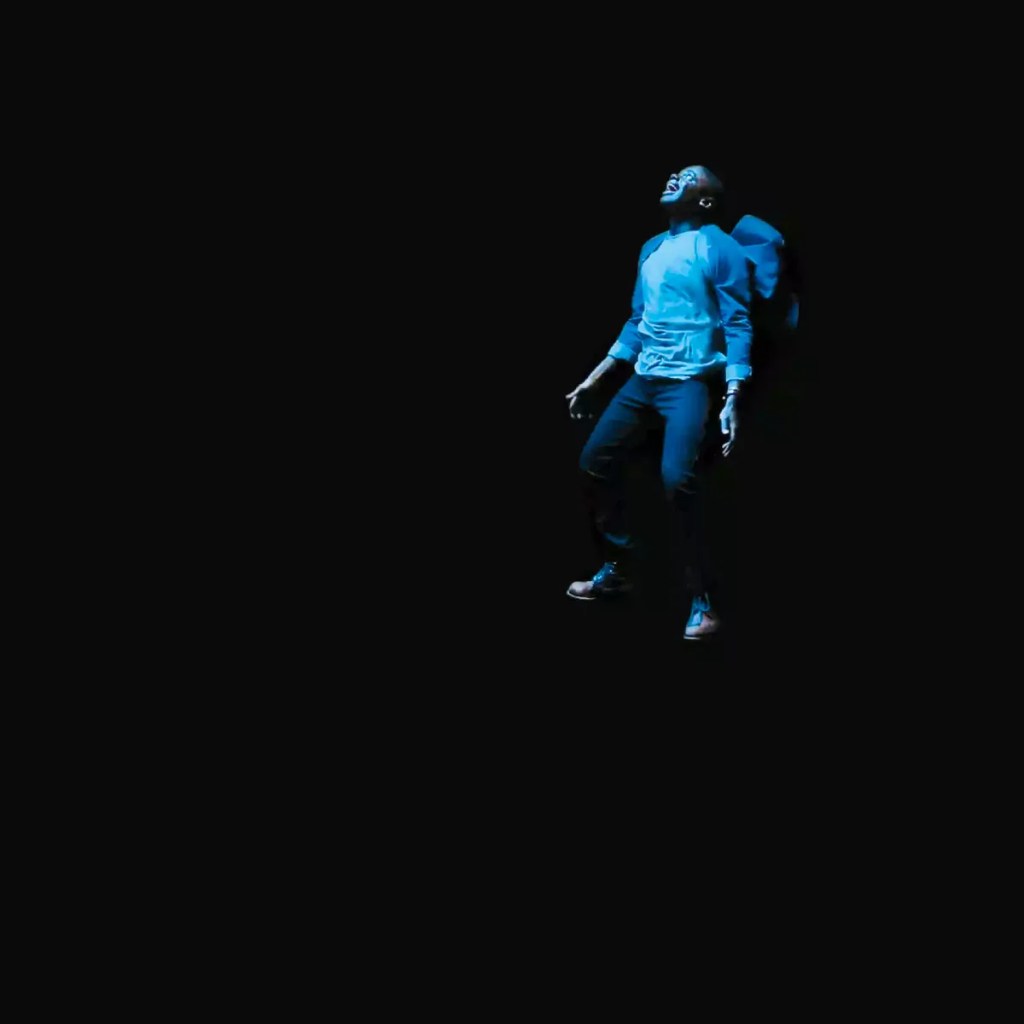
Now, thankfully, thoughts do not define someone’s actions and values, and by using ERP (exposure and response prevention) in combination with mindfulness and self-compassion techniques, someone can learn to have a thought without letting it take up their full attention. Furthermore, this is one example of an obsession targeting one’s most important values, but there are numerous other ways obsessions can infect someone’s life. No matter what the obsession is, if you have experienced living with severe OCD, it can sometimes feel as if you are trapped in a downward spiral. Specifically, I picture the visual from Get Out depicting the main character falling into the sunken place; sometimes it feels like you are being forcefully dragged deep into a dark void.
Similarly, compulsions are also rather sneaky since they can be physical or mental. Despite the stigma that OCD can only be depicted as excessive hand washing or compulsively rearranging items, OCD can take on lots of different forms – all of which are painful to endure. Some compulsions include rumination, tapping, counting, avoiding objects or stains, checking objects repeatedly, hand washing, using hand sanitizer excessively, and repetitively scanning your body for signs that you are sick. The list goes on and on due to OCD’s complexity.
However, there is always a reason to hold onto hope! Self-compassion combined with ERP can typically help someone cope with OCD. I can attest firsthand that these are the cornerstones as I continue to recover. Without speaking to myself from a compassionate, encouraging perspective and without doing daily exposures, I would likely be unable to take care of myself. I would feel completely paralyzed in bed, stuck in OCD spirals for days on end, as I was several years ago.
However, I must warn you, before you embark on this painful road, ERP is NOT fun. It is a grueling, intimidating, yet incredibly gratifying, life-altering process. In addition, if you are willing to undergo ERP, you can also use it to face your fears (even if you do not suffer from OCD), but as for the readers that do have OCD, applying ERP to your life every single day will likely allow you to regain a lot of the time OCD has stolen. As you learn to push yourself to overcome the obstacles you once cowered to, you will also be rewarded with an increased sense of self-understanding and self-respect.
ERP (EXPOSURE AND RESPONSE PREVENTION)
Step One: Identify your obsessions and compulsions The first step is being aware. Without knowing what is fueling your OCD, you cannot begin to smother its flame. Write down what your obsessions and compulsions are.
Step Two: Figure out your triggers. List all of your triggers (small and large). Then, you need to rank them from 1-10 (from the least to most intense).
Step Three: Baby steps 🪜 You must be patient yet persistent with yourself as you slowly expose yourself to your triggers. You need to start with triggers that are lower ranked. Once you become more accustomed to the process, you will understand yourself better. You may be able to handle trying to shoot for a 7 after you have performed exposures ranked at 3s and 4s, but someone else may get overwhelmed by doing this. Everyone’s tolerance is different, and everyone moves at a different pace. If you take it slow at first, and stay consistent, the exposures will pay off more in the long term than if you are rushing through them. By speedrunning through the ERP, you are risking overwhelming yourself to the point where the treatment is no longer helping but rather hurting, or you could be zoning out and depriving yourself of fully experiencing the necessary discomfort and uncertainty that comes along with ERP. Not to mention, if something tragic and overwhelming has recently occurred in your life (such as losing your job or a loved one), the treatment may not be fully effective. In The OCD Workbook, the author states that “economic distress and instability can topple even the most successful treatment efforts” (Hyman & Pedrick 248). However, you must not continuously delay the ERP as well. You have to balance between not avoiding exposures but also not pushing yourself further into instability.
Step Four: Habituation Make it a habit. Repeat the same exposure every day, and eventually, your fear and stress around it will reduce. The more you do what you are scared of, and the less you perform compulsions, the more you teach your brain to tolerate a ridiculous amount of uncertainty.
However, the key is to remove the compulsion. Performing compulsions teaches your mind that if you do not repeatedly accomplish a specific action, something unbearable will happen, so you must look out for OCD trying to latch back onto your mind. It slithers in and tries to ruin your exposures. If you can delay performing a compulsion or remove it altogether, you will significantly improve the quality of your treatment.
Step Five: Write down everything Write down the exposures you have done, and how your anxiety levels were before and after. Also, note what compulsions you did (if any) and for how long. Write down whether you were able to delay them as well (along with the duration of the delay). Lastly, always remember to be understanding and kind to yourself rather than pushing for perfection. The whole purpose of ERP is to be able to patiently learn that we can tolerate uncertainty and imperfect situations.
Step Six: Challenge false beliefs Often, we have beliefs that keep us stuck in cycles of self-hate and criticism. For example, if I feel like I have to do everything perfectly, I am putting an enormous amount of pressure on myself. Sometimes things need to be good enough. Another false belief is that everyone needs to treat you the way you desire to be treated. The reality of life is that you cannot control if everyone respects you; you can only control the boundaries you set and the people you choose to keep around. By trying to challenge beliefs that are holding you back, you can learn to be kinder to yourself and grow a deeper sense of self-awareness. You will also have more success with ERP since the more accurate your worldview is, the easier it is to cope with the stress and uncertainties that exposures hurl your way.
Step Seven: Do it again and again! ERP is a lifestyle.
This needs to become part of your daily routine. If you want to recover, it is essential to work on ERP as if it were your side job. This is not easy work, but if you commit yourself to doing it as consistently as you can, then your life will change before your own eyes. Trust me, I’ve seen it for myself. Without ERP, I would be a shell of the person I am today. I probably would be compulsing and having panic attacks for hours at a time, so I would not be able to focus long enough (or even find the fuel) to write this blog post.
OCD is not as two-dimensional as the media often portrays it to be. It is a complex, multifaceted illness with a difficult but fulfilling and transformative treatment. It is something I would not wish upon my worst enemy, yet it needs to be spoken about and understood.


 ME vs. OCD
Leave a comment